
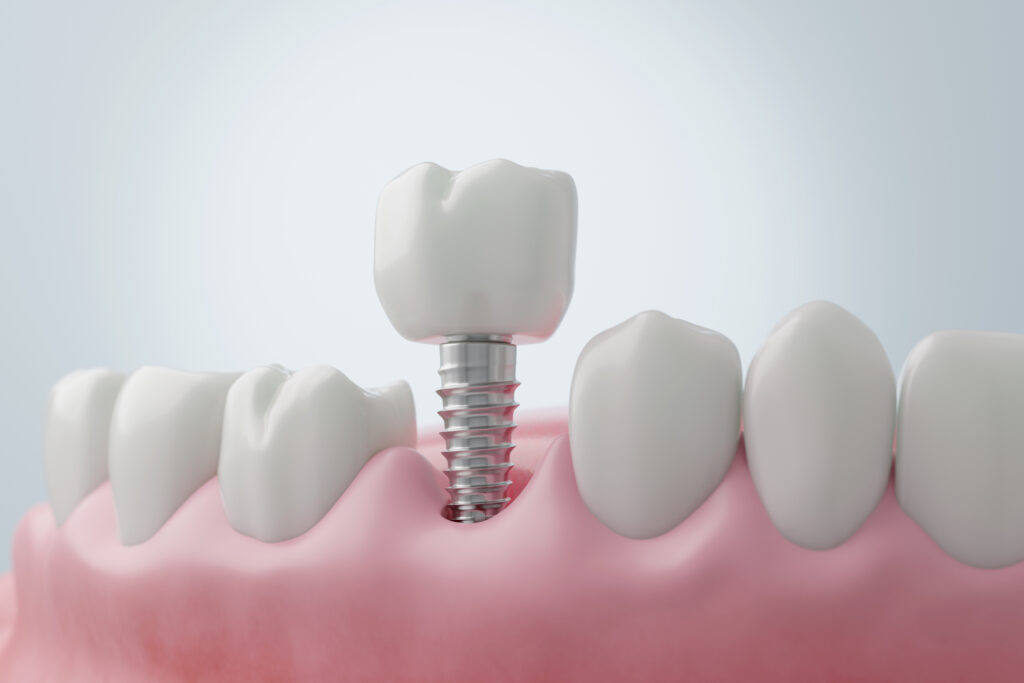
If you have lost a tooth you have two main long-term options for replacing it: a dental implant or a dental bridge. Both can restore the appearance and function of your smile, but they work very differently and the right choice depends on your specific situation.
A bridge fills the gap left by a missing tooth by placing a false tooth supported by the teeth on either side of the gap. Those neighbouring teeth are prepared, meaning some of their natural structure is removed, to accommodate the crowns that hold the bridge in place. A well-made bridge looks natural, functions well and can last many years with proper care. However it does involve permanently altering otherwise healthy adjacent teeth and the bone beneath the gap gradually reduces over time without a root to stimulate it.
A dental implant replaces a missing tooth at the root level. A small titanium post is placed into the jawbone, where it integrates with the surrounding bone over a period of months. Once stable, a crown is attached on top producing a result that looks, feels and functions almost identically to a natural tooth. Crucially the implant stimulates the jawbone in the same way a natural root does, preventing the bone loss that occurs after tooth loss.
Implants are widely considered the gold standard for single tooth replacement, offering the most natural long-term result. Bridges remain an excellent option in certain situations, particularly when adjacent teeth already require crowns or when a quicker solution is needed. The initial cost of an implant is higher, but given that they can last twenty or more years with good care, many patients find them the more economical choice over time.
At Regent Dental Care, our Implant Surgeon Dr Sekhar Reddy Nallamilli and Consultant Oral Surgeon Dr Madhu Malikireddy carry out a thorough assessment before recommending any treatment. You can find out more about both dental implants and tooth replacement options at regentdental.im.